Global Air Freight.
Speed & Precision.
Expedited Shipping for urgent global needs
1
Point Of Contact
10K+
Air Shipments Per Year
8K+
Cargo Shipped By Air Per Year
12
Years In The Industry
When To Use Air Freight
You use air freight when waiting is not an option. A deal is on the line. Production is paused. An event is days away. Your best-selling product just sold out and customers are waiting. The shipment itself might be small, but the consequences of delay are not.
Air freight costs more because you are buying speed, priority handling, and the convenience of getting it done without having to chase ten different parties. If being late would cost more than the transport, flying it is the sensible move.
Most air shipments are not massive pallets of goods. They are urgent parcels, critical components, prototypes, samples, replacement parts, or last-minute inventory that simply cannot wait.
Key Indicators
A sale depends on the delivery happening on time
Production is waiting on a missing part to complete the project
You are sending samples to win more business
A launch, event, or promotion has a fixed due date.
You ran out of stock sooner than expected, and demand is high
The cargo is valuable relative to its size
You just need it handled quickly and properly
If your timeline can stretch into weeks, slower modes will save money. If it cannot, air freight removes the waiting from the equation.
Do You Need Air Freight?
If you are deciding whether air freight is truly necessary or if a slower mode could work, these three questions usually settle it quickly. If you answer yes to all three, air freight is almost always the only practical option.
Critical Deadline
If being late will cost you money, damage a relationship, delay a launch, or stop operations, air freight is usually the safest option. It is designed for shipments tied to dates that cannot move, not flexible timelines. When the consequences of delay outweigh the transport cost, flying it protects the outcome.
Shipment Size
Air freight makes the most sense when the cargo is relatively small, dense, or high-value. As a practical guide, shipments under 500 to 1,000 kg or roughly 4 – 6 cubic metres are typically well suited to air. Larger loads can fly, but costs rise sharply, so air is usually reserved for smaller shipments with big impact.
Capacity Constraints
Moving goods by slower modes often requires more coordination, monitoring, and tolerance for delays. If your team does not have the time, manpower, or appetite to manage long transit chains, port processes, or weeks of uncertainty, air freight simplifies the entire movement. It compresses complexity into a fast, controlled delivery that stays off your plate.
What Happens When You Ship By Air
From your side, it should feel simple. You tell us where the goods are, where they need to go, and when they need to arrive. We take it from there. Behind the scenes, there is a lot happening to make that simplicity possible.
We arrange pickup from your location, prepare the shipment for international movement, and move it to the departure airport. It is screened, accepted by the airline, and loaded onto the booked flight.
Depending on the route, it may fly direct or connect through a major hub. After landing, it goes through import procedures, customs clearance, and handling before final delivery to your door or your customer’s door.
Air freight does not start at the airport, and it does not end there. The real value is having the whole journey managed as one continuous movement, so nothing falls through the cracks.
Most Common Air Freight Disruptions
Flight Delays Or Cancellations
Weather, technical issues, or operational changes can delay departures or remove flights from the schedule.
Missed Connections And Transfers
If an inbound flight arrives late, cargo can miss its onward flight and wait for the next available departure.
Limited Space During High Demand
Aircraft capacity fills quickly during peak seasons, which can force shipments onto later flights.
Additional Screening or Inspections
Security or compliance checks may hold cargo for further review before it can continue.
Congestion At Major Airports
Busy hubs can slow handling, unloading, or onward transfer even after the aircraft lands.
Documentation Issues Slow Release
Missing or incorrect paperwork can delay clearance until corrections are made.
What Door-to-Door Really Means In Air Freight
Air freight is not just a flight. Your shipment moves by truck to the departure airport, through export processes, onto one or more aircraft, through arrival handling and customs, and finally by road to the destination. If any one of these stages is misaligned, the whole movement slows down.
Door-to-door means the entire chain is managed as one continuous shipment, not a collection of separate handovers.
At SendIt, we coordinate pickup, documentation, airline booking, airport handling, clearance, and final delivery so everything connects properly. You do not need to manage multiple providers or worry about what happens between milestones. Tell us where the cargo is, where it needs to go, and when it must arrive. We handle the rest.
Types of Aircraft Used for Air Freight
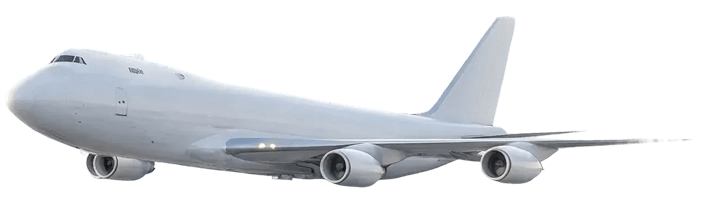
Not all air shipments travel the same way. Depending on size, urgency, destination, and budget, cargo may move on different types of aircraft. Each option balances speed, cost, capacity, and flexibility differently.